Dylan & The Dead: How Bob Dylan and the Grateful Dead Rewrote Live Collaboration
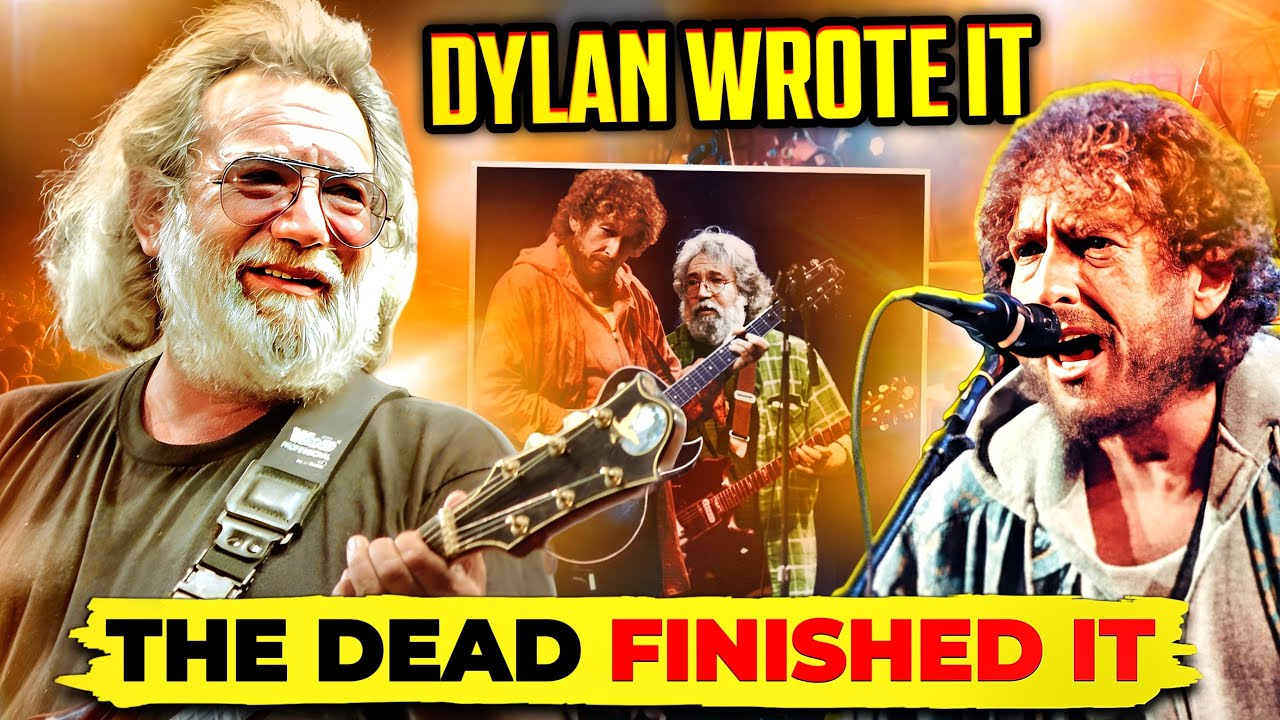
In the summer of 1987, two towering figures of American rock and roll converged on stadium stages across North America. Bob Dylan, the Nobel laureate of songwriting whose revolutionary albums had fundamentally altered the trajectory of popular music, agreed to share the stage with the Grateful Dead—a band that had built its entire existence on the principle of musical exploration and collective improvisation. This wasn’t a casual jam session. Dylan & the Dead was six stadium shows that would become one of the most polarizing events in the history of live rock music.
The collaboration emerged almost inexplicably from a moment of mutual creative interest. Neither artist was in decline—both were actively touring and recording—but there was something magnetic about the possibility of combining Dylan’s catalog with the Dead’s improvisational apparatus. Dylan’s catalog is built on narrative detail and poetic density; the Dead had spent two decades proving that songs were living things, constantly evolving through different arrangements, extended instrumental passages, and the unique chemistry of five musicians locked in real-time conversation.
The rehearsals at Front Street studio in San
The rehearsals at Front Street studio in San Rafael, California revealed something unexpected about Dylan’s approach to preparation. Dylan famously didn’t bring his own guitar to the first rehearsal—a curious choice for a musician about to undertake six major stadium performances with an unfamiliar band. Bobby Weir, the Dead’s rhythm guitarist and one of the band’s anchors, recognized the logistical problem. He called Modulus, the California-based guitar manufacturer, and asked them to bring a selection of instruments to the studio.
Dylan’s choice was striking: he selected a Pepto-Bismol pink Strat from the options. The color seems absurd in hindsight—Dylan, the serious poet-musician whose 1965 “Like a Rolling Stone” had redefined rock and roll, playing a hot pink guitar. But this detail tells us something about both Dylan and the moment. Dylan was willing to be flexible, playful even, stepping outside his usual operating procedure. The rehearsals were described as strange, marked by a certain unfamiliarity and the peculiar challenge of trying to build musical cohesion between the spare, focused delivery Dylan preferred and the sprawling, adventurous approach that defined the Dead.
The six stadium shows unfolded across the American summer—massive venues filled with fans who had wondered for years how these two unlikely partners would sound together. The results were inconsistent. Some nights the Dead’s expansive approach meshed beautifully with Dylan’s compositions. Other nights, the performances felt bloated, lacking the precision Dylan brought to his own arrangements or the unbridled groove that defined the Dead’s best work. Critics and fans noticed the uneven quality immediately. The energy in the stadiums varied dramatically from show to show, and not every combination of artist and song worked.
Dylan’s voice
Dylan’s voice—aging and weathered, but still powerful in its own way—dominated some performances and faded into the mix on others. The Dead, used to being the primary focus, had to adjust to sharing stage space with a figure whose songwriting legacy dwarfed even their substantial catalog. There were moments of transcendence, but they were scattered among longer passages of musical wandering that didn’t always find its way home.
When Dylan & the Dead released their live album in 1989—a double album drawn from the six stadium shows—the critical response was swift and damning. Many observers and music journalists consider it one of the worst live albums ever released by any major artist. This is not subtle criticism. The album captured some of the uninspired moments from the tour, and the production—how the performances were mixed, edited, and presented—didn’t do either artist any favors.
Yet even controversial albums have consequences. The failure of Dylan & the Dead on record didn’t erase what had happened in reality. The collaboration had legitimated a certain kind of creative exchange. It proved that Dylan, despite his reputation for maintaining tight control over his own work, was willing to experiment with his songs in unfamiliar contexts. And it showed that the Dead, despite their reputation for endless noodling, could engage seriously with material that wasn’t their own.
What’s most interesting about the Dylan & the
What’s most interesting about the Dylan & the Dead collaboration isn’t what happened immediately, but what happened after. Dylan played on “Built to Last,” a Grateful Dead song from the later era of their career. This seemed improbable for an artist who had largely kept his distance from other people’s compositions since the early 1970s. The collaboration had created a permission structure—if Dylan could play the Dead’s music, why couldn’t the reverse occur?
For the Dead, the Dylan experiment revealed something about the limits and possibilities of their improvisational approach. Playing Dylan’s compositions forced them to engage with extremely high-quality material written by someone else, material with significant literary and historical weight. It wasn’t the free-form exploration of originals like “Terrapin Station” or “China Cat Sunflower,” but it was creatively demanding in its own way.
The title of this episode—”Masterpiece”—refers to something less tangible than a specific song or a specific moment. It speaks to the deep explorations of material, the ambitious reach to find something meaningful at the intersection of two artistic traditions. The Dylan & the Dead collaboration failed commercially and critically, but it succeeded at something more important: it created a space where Dylan’s literary precision and the Dead’s improvisational openness could collide and interact.
The strange rehearsals
The strange rehearsals, the pink Strat, the inconsistent stadium shows, the poorly-received album—these aren’t the components of a masterpiece in the traditional sense. But they are the components of an experiment that mattered. In the history of rock and roll collaboration, few partnerships have been as improbable or as culturally significant as this meeting of two artistic worlds.
The summer of 1987 reminds us that the greatest achievements in music don’t always come wrapped in commercial success or critical acclaim. Sometimes they arrive as strange detours, unexpected moments of creative risk-taking that expand what musicians believe is possible. Dylan & the Dead proved that even after decades of defining American music, these artists still had the curiosity and ambition to test new waters.
The Song in Context
Understanding any Grateful Dead song requires understanding the partnership between Jerry Garcia and Robert Hunter that produced it. Hunter was not a conventional lyricist — he was a poet who happened to write for a rock band. His words drew from American folk traditions, Beat poetry, and a mythological imagination that created characters and landscapes existing outside of any specific time or place. Garcia’s melodies, in turn, had a quality that musicologists have struggled to categorize — folk-informed but jazz-inflected, simple on the surface but harmonically sophisticated beneath.
The songs they created together entered the Grateful Dead’s live repertoire and evolved constantly. A song might be performed hundreds of times over decades, and no two versions were identical. Tempos shifted, arrangements expanded and contracted, and improvisational passages grew or shrank depending on the band’s collective mood on any given night. For Deadheads, the song as recorded in the studio was merely a starting point — a sketch that live performance would elaborate into something far more complex and unpredictable.
The Live Experience
The Grateful Dead’s live performances were fundamentally different from those of any other major rock band. While most acts rehearsed and repeated a fixed setlist, the Dead approached each show as a unique event. Setlists were chosen shortly before the performance, and the transitions between songs — the spaces where improvisation lived — were entirely spontaneous. A concert might last three hours or more, moving through structured songs, extended jams, and passages of pure collective improvisation that could be transcendent or chaotic, sometimes both simultaneously.
This approach demanded extraordinary musical communication. Each member of the band had to listen constantly to every other member, responding in real time to melodic suggestions, rhythmic shifts, and dynamic changes. Garcia often described it as a conversation — not a performance, but a dialogue between musicians who had developed, over years of playing together, an almost telepathic understanding of each other’s musical instincts. When it worked, the result was music that felt inevitable and surprising at the same time.
The Deadhead Phenomenon
The community that formed around the Grateful Dead was unprecedented in popular music. Deadheads didn’t just attend concerts — they built a culture. Tape trading networks distributed live recordings across the country before the internet existed, creating a shared archive of performances that fans studied with scholarly intensity. The parking lot scene at Dead shows became a self-sustaining economy of food vendors, craft sellers, and itinerant entrepreneurs who followed the band from city to city.
What distinguished Deadhead culture from ordinary fandom was its participatory nature. Deadheads didn’t consume the Grateful Dead’s music passively — they actively shaped the experience. Their energy in the audience influenced the band’s playing. Their tape trading preserved and disseminated the music. Their economic activity in the parking lots created the ecosystem that made extended touring financially viable. The relationship between the Dead and their audience was genuinely symbiotic, each sustaining and inspiring the other across three decades of continuous performance.
Related Articles
- Why The Dead Took 7 Years To Rise Again
- Bob Weir Has Died. What Happens to the Grateful Dead Now?
- Bob Weir’s Legacy: The Rhythm Guitarist Who Made the Grateful Dead Possible
The Shakedown Archives publishes new research on Grateful Dead history each week. If you enjoyed this essay, you can subscribe to the companion YouTube channel below.
Subscribe on YouTube