From Jug Bands to Grateful Dead: The Folk and Bluegrass Roots of American Rock
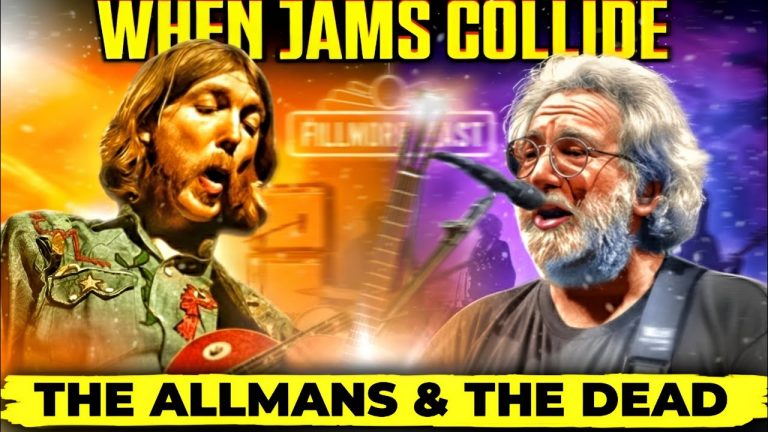
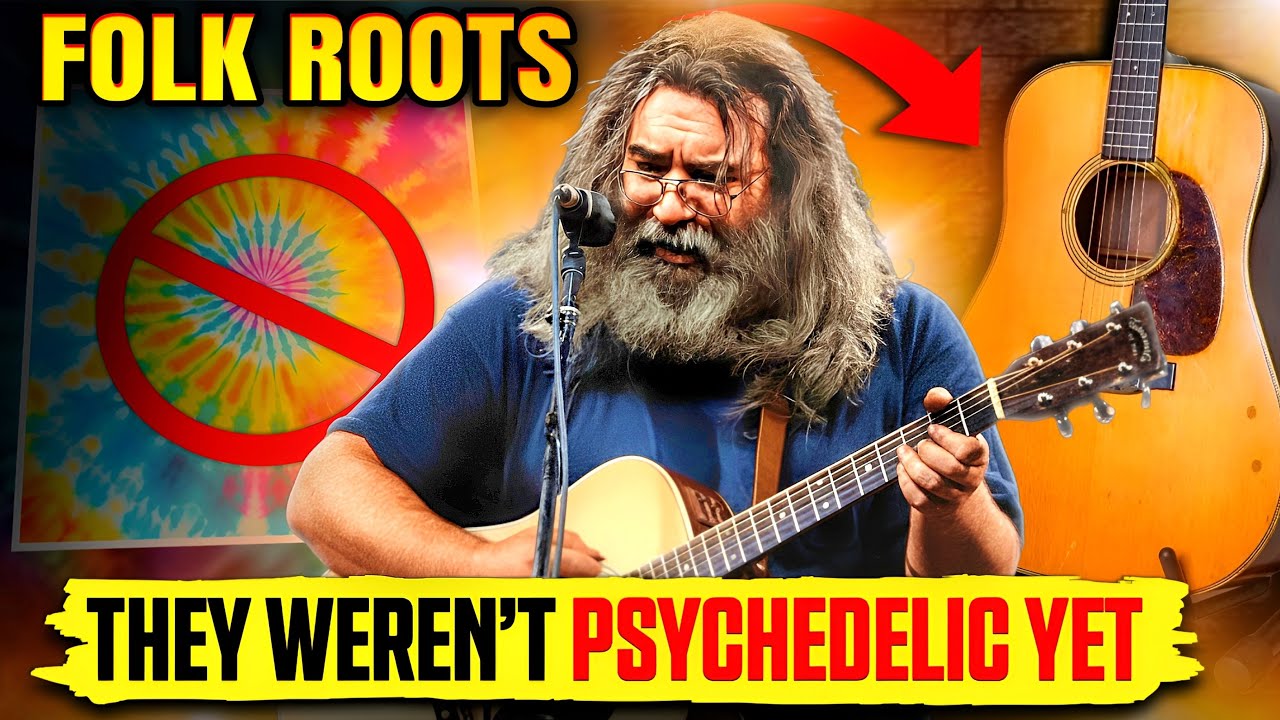
The Grateful Dead did not emerge fully formed from the San Francisco psychedelic scene of the mid-1960s. Long before they played the Fillmore, long before the Acid Tests and Ken Kesey’s Pranksters, the band members were steeped in a distinctly American musical tradition: folk music, bluegrass, and jug band blues. This foundation shaped everything the Dead would become—their instrumental sophistication, their commitment to authenticity, their belief that music was a conversation between living, breathing human beings rather than a predetermined performance.
To understand the Grateful Dead, you must first understand the musicians who came before them. You must know Jerry Garcia playing banjo in San Francisco jug bands, Robert Hunter singing folk in coffee houses, and the older musicians whose records provided the blueprint for what would eventually become one of the most important bands in American rock history.
Before anyone called them the Grateful Dead or
Before anyone called them the Grateful Dead or even the Warlocks, before they had fully committed to electric instruments or psychedelic exploration, the core musicians gathered around Jerry Garcia were playing jug band blues. Mother McCree’s Uptown Jug Champions featured Jerry Garcia on banjo alongside Pigpen (Ron McKernan), the Dead’s future keyboardist and harmonica player, and Bob Weir, the rhythm guitarist who would remain with the band until the end.
This was not a novelty project or a side gig. This was serious engagement with American roots music. Jug bands occupied a fascinating space in the American musical landscape—they drew from blues traditions, incorporated folk elements, and operated at the intersection of folk and blues that predated rock and roll. The instrumentation was intimate, acoustic, played with the kind of precision and attention to detail that would later translate directly into the Dead’s live performances.
Pigpen particularly embodied this jug band aesthetic. His harmonica playing and his deep knowledge of blues tradition gave the early Dead a connection to American musical history that many 1960s rock bands lacked. When the Grateful Dead added electric instruments and began exploring psychedelia, they didn’t abandon the jug band sensibility—they expanded it. The attention to ensemble playing, the respect for the material, the understanding that good music emerges from musicians listening to each other: these principles came directly from the jug band tradition.
Jerry Garcia was not primarily trained as a
Jerry Garcia was not primarily trained as a rock and roll guitarist. His early musical education came through banjo and through the records of American bluegrass masters. Bill Monroe, the father of bluegrass music, was a foundational influence. Doc Watson, the legendary North Carolina guitarist whose fingerpicking style revolutionized American acoustic music, was studied intensely. Earl Scruggs, whose three-finger banjo technique became the standard for the instrument, was another crucial touchstone.
Garcia didn’t just listen to these musicians passively. He learned their techniques, understood their approach to instrumental conversation, and absorbed their philosophy: that musicians should be able to play together without extensive rehearsal, that traditional material could be reimagined, that the song was a framework for musical exploration rather than a fixed product.
This bluegrass foundation had profound consequences for the Grateful Dead. Bluegrass is music built on instrumental virtuosity and ensemble listening. In a bluegrass band, musicians cue each other through subtle changes in dynamics, timing, and emphasis. There’s no conductor, no predetermined arrangement. What works is what the musicians decide works in real time. The Dead took this fundamental principle and expanded it into their own improvisational language.
Garcia remained connected to bluegrass his entire life
Garcia remained connected to bluegrass his entire life. He played banjo alongside guitar, right up until his death in 1995. This wasn’t a nostalgic gesture. It represented a continued commitment to a musical tradition and an instrumental approach that never lost its relevance to his understanding of how music worked.
If Jerry Garcia represented the bluegrass and instrumental foundation of the Grateful Dead, Robert Hunter represented the folk tradition—the literary, lyrical, poetic side of American vernacular music. Hunter was a folk singer before he became the Grateful Dead’s primary lyricist. He came of age during the 1960s folk revival, when songwriting and poetic expression through folk music seemed like legitimate artistic pursuits.
Hunter’s involvement with the Dead transformed their music. Before Hunter, the band had a rhythm section, instrumental sophistication, and a psychedelic ethos, but no singular lyrical voice. Hunter provided that. His lyrics drew from folk traditions, from American history, from personal experience and collective consciousness. Songs like “Dark Star,” “Casey Jones,” and “Rosalie McFall” brought narrative and thematic depth to the band’s instrumental explorations.
Hunter understood that lyrics didn’t need to be
Hunter understood that lyrics didn’t need to be obvious or literal. He could write about trains, about death, about the road, about community, and pack multiple meanings into every phrase. This approach came directly from his folk background—from the tradition of folk lyrics that worked on multiple levels simultaneously.
The Grateful Dead’s catalog is filled with songs that explicitly reference their folk and bluegrass heritage. “Friend of the Devil,” one of their most famous compositions, is structured like a folk ballad, with a traditional folk melody and narrative lyrics. “Ripple,” with its finger-picked acoustic guitar and its meditation on the way small actions create expanding consequences, could have been a folk song from the 1950s except for the profundity of Hunter’s lyrics and the sophistication of Garcia’s melody.
“Uncle John’s Band” opens with a folk-style fiddle section before the full band enters. The song’s themes of community and gathering drew directly from folk tradition. “Cumberland Blues” is an explicit engagement with traditional blues and folk material, a song that celebrated the musicians and traditions that came before the Dead.
These weren’t novelty or nostalgic songs
These weren’t novelty or nostalgic songs. They were songs that proved the Dead had internalized the lessons of folk music—its authenticity, its connection to real human experience, its belief that music could be a vehicle for meaning and community.
In 1973, Jerry Garcia participated in a bluegrass project called Old and In the Way alongside David Grisman, the mandolin virtuoso, and Peter Rowan, a singer and guitarist who had played with bluegrass legend Bill Monroe. The album “Old and In the Way” was a bluegrass record, pure and simple. Garcia played banjo, singing harmonies with Rowan, engaging in the kind of instrumental conversation that had defined his musical education.
The album was successful beyond expectations. It proved that there was an audience for bluegrass, that the tradition had contemporary relevance, and that a musician who had helped define psychedelic rock could return to the roots of American music without losing credibility or relevance. Old and In the Way represented a full-circle moment for Garcia—a chance to play the music he had learned from as a young musician, with players who understood that tradition as deeply as he did.
What makes the Grateful Dead unique among the
What makes the Grateful Dead unique among the major rock bands of their era is the way they maintained conscious connection to their roots throughout their entire career. They didn’t treat folk and bluegrass as historical traditions to be studied and abandoned. They understood these traditions as living, evolving approaches to music-making.
The Dead’s improvisational approach, their commitment to ensemble playing, their belief that songs could change night to night while remaining fundamentally themselves—all of these came directly from folk and bluegrass traditions. The acoustic instruments that appeared regularly in their performances, Garcia’s continued engagement with the banjo, the fiddle and mandolin sections in their arrangements, the storytelling approach to lyrics—these weren’t decorative touches added to a rock and roll foundation.
They were the foundation itself.
The Grateful Dead proved that American folk and
The Grateful Dead proved that American folk and bluegrass traditions were not historical artifacts but living frameworks for musical creation. By taking the lessons of Mother McCree’s Uptown Jug Champions, Bill Monroe, Doc Watson, and the folk singer-songwriters of the 1960s, and translating them into the context of rock and roll, the Dead created something unprecedented. They showed that deep roots and radical experimentation weren’t opposed forces. They were complementary aspects of a serious engagement with music.
Understanding the Grateful Dead requires returning again and again to those origins—to the jug bands and the bluegrass records, to the folk singers and the traditional musicians. Those roots never stopped shaping what the band created.
Related Articles
- How Janis Joplin Lit Up the Grateful Dead: Blues, Whiskey, and Rock and Roll Heaven
- Tiger Rose: The Mysterious Album Robert Hunter Tried to Erase From History
- Dark Star’s Transformation: From 1968 Single to Grateful Dead’s Live Show Classic
The Shakedown Archives publishes new research on Grateful Dead history each week. If you enjoyed this essay, you can subscribe to the companion YouTube channel below.
Subscribe on YouTube