The Night the Grateful Dead Tried to Fire Bob Weir and Pigpen
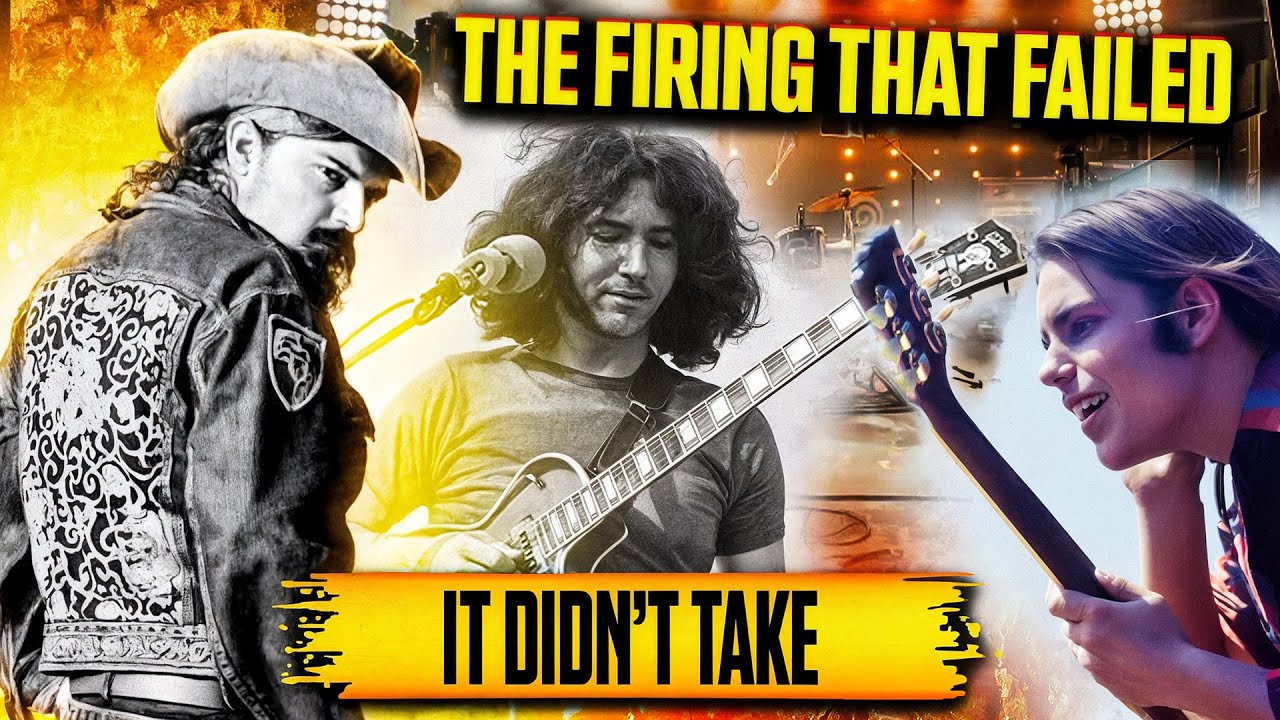
In 1968, the Grateful Dead held a band meeting and voted to fire two of their founding members. Bob Weir, the rhythm guitarist who’d been with Garcia since the Mother McCree’s Uptown Jug Champions days, and Pigpen, the blues-drenched organist and frontman who’d been the band’s original leader — both were told they were out. The decision was real. The reasons were musical. And the fact that it didn’t stick tells you more about what the Grateful Dead actually were than almost any other story in their history.
The context matters. By 1968, the Dead had moved far beyond the blues and jug band roots that Pigpen had defined. Anthem of the Sun, their second album, was an avant-garde experiment in multi-track collage — splicing live performances together with studio overdubs into something that sounded more like musique concrète than rock and roll. The band’s musical ambitions had exploded. Garcia, Lesh, and Mickey Hart were pushing into territory that required technical precision, improvisational daring, and a willingness to abandon song structure entirely in pursuit of something stranger.
Weir, at the time, wasn’t keeping up. He was the youngest member of the band — only twenty when the firing happened — and his rhythm guitar playing hadn’t yet developed the sophisticated chord voicings and rhythmic counterpoint that would later make him irreplaceable. Garcia and Lesh saw a musician who was cluttering the sound, strumming through passages that needed space and silence. The complaint wasn’t about effort. It was about ears. Weir wasn’t hearing what the music needed.
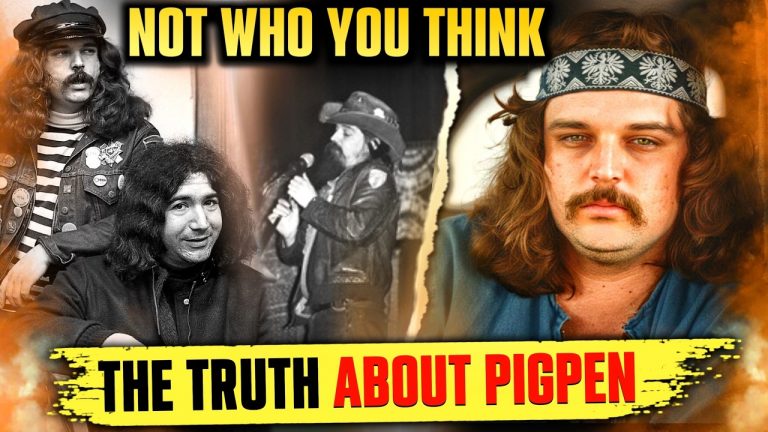
Pigpen’s problem was different but equally fundamental. The Dead’s psychedelic evolution had left him behind musically. Pigpen didn’t play lead. He didn’t improvise in the way Garcia and Lesh did. His organ work was rooted in blues and R&B — the Elmore James and Bobby Bland records he’d grown up on — and that vocabulary was increasingly irrelevant to what the Dead were becoming. He couldn’t follow them into the twenty-minute explorations of Dark Star. He couldn’t contribute to the atonal experiments. During the band’s most adventurous passages, Pigpen would sometimes just stop playing and stand at the side of the stage.
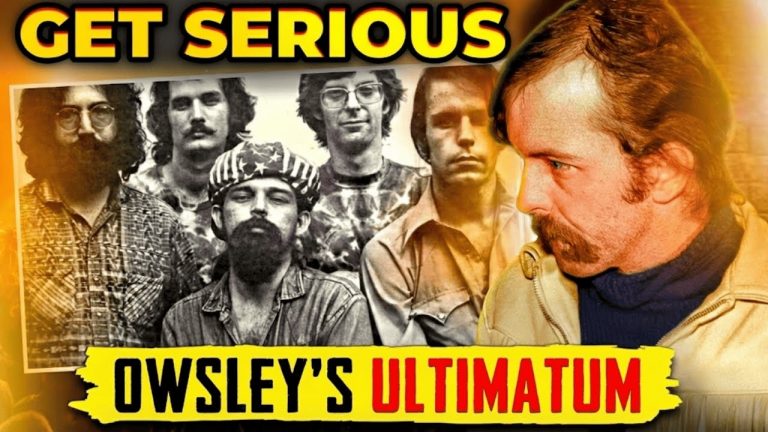
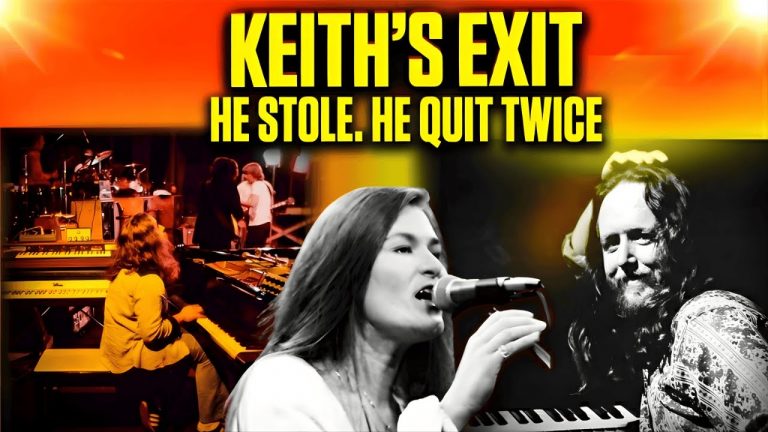
The firing wasn’t impulsive. Multiple band members have confirmed that it was a deliberate, discussed decision. TC (Tom Constanten), the classically trained keyboardist who’d recently joined, represented the direction the band wanted to go — cerebral, experimental, untethered from blues convention. Weir and Pigpen represented the past.
But here’s where the story turns. The firings didn’t hold. Within weeks, both Weir and Pigpen were back. The reasons vary depending on who tells the story. Some accounts emphasize the personal bonds — Garcia and Weir had been playing together since Weir was a teenager; Pigpen had been the one who originally brought the band together at Dana Morgan’s music store in Palo Alto. Others point to practical reality: the Dead were a touring band with gig commitments, and restructuring in the middle of a schedule wasn’t feasible.
The deeper truth is probably simpler. The Grateful Dead weren’t, at their core, a band that could fire people. Their entire operating philosophy was built on inclusion, on the idea that the music emerged from the collective and couldn’t be engineered by subtracting members. Garcia, for all his musical authority, never wanted to be a bandleader. He resisted hierarchy instinctively. Firing people required exactly the kind of top-down authority that the Dead’s communal structure was designed to prevent.
Weir responded to the crisis by getting better. Dramatically better. Over the next few years, he developed the rhythmic style that would become his signature — a percussive, chord-based approach that wove between Garcia’s lead lines and Lesh’s bass, filling space without cluttering it. By the early seventies, Bob Weir wasn’t just adequate. He was essential, a rhythm guitarist so distinctive that his playing became one of the defining features of the Dead’s sound.
Pigpen’s trajectory went the other way. His health was already deteriorating by 1968 — heavy drinking had started to take a visible toll — and while he remained the band’s most charismatic stage presence, his musical role continued to shrink as the Dead’s compositions grew more complex. Pigpen’s last show was June 17, 1972, at the Hollywood Bowl. He died on March 8, 1973, of a gastrointestinal hemorrhage. He was twenty-seven.
The 1968 firing attempt is one of those moments that reveals a band’s real character. The Dead identified a genuine problem — two musicians who weren’t matching the band’s trajectory — and tried to solve it the way any normal organization would. It failed because the Grateful Dead weren’t a normal organization. They were a family that played music, with all the dysfunction and loyalty that implies. The full story of how it happened, why it failed, and what it cost is in the documentary above.
Subscribe to The Shakedown Archives on YouTube
youtube.com/@theshakedownarchives