Frankie Weir, Sugar Magnolia, and the Women Who Actually Ran the Grateful Dead
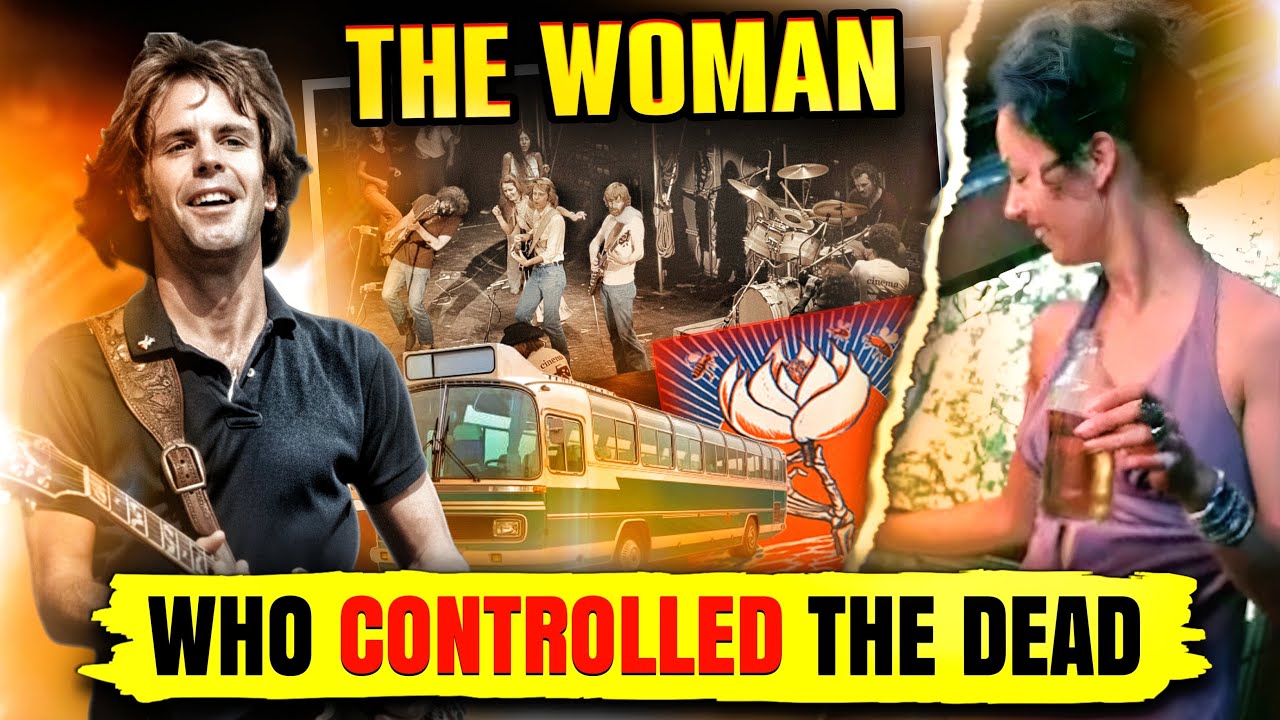
Everyone knows “Sugar Magnolia.” The singalong closer, the summer anthem, Bob Weir bouncing across the stage while thousands of Deadheads belt out every word. What most people don’t know is the woman who inspired it — and the fact that she wasn’t just a muse. She was one of the people who kept the entire Grateful Dead operation from falling apart.
Frankie Azzara was a former go-go dancer who’d performed on Shindig! and Hullabaloo, worked as a Rockette, and served as George Harrison’s secretary at Apple Records before drifting west into the San Francisco scene in the late sixties. She initially dated Mickey Hart, but according to Rhoney Stanley — Owsley’s partner — Frankie saw Bob Weir and made a decision. She decided he was hers. And what happened next changed Weir as a musician, a songwriter, and a presence onstage.
Before Frankie
Before Frankie, Weir was the Dead’s scruffy kid brother — the youngest member, the one who’d nearly been fired in 1968 for not keeping up musically. After Frankie, his confidence grew. His grooming improved. He started carrying himself like a frontman. When “Sugar Magnolia” debuted at the Fillmore East in June 1970 and was recorded for American Beauty that summer, Robert Hunter and Weir wrote lyrics that pointed directly at a real relationship. “She can dance a Cajun rhythm” — Frankie was literally a professional dancer. “She waits backstage while I sing to you” — that’s where she stood during shows. “Takes the wheel when I’m seeing double, pays my ticket when I speed” — Frankie had a reputation for driving band members around and handling their problems while they were too high to function.
But the deeper story isn’t the song. It’s what Frankie built.
In February 1973, Frankie purchased an existing travel agency, renamed it Fly By Night Travel, and became its president — the sign on her door read “Melon in Charge.” The agency handled hotels, flights, and logistics for the Dead, New Riders of the Purple Sage, Old & In The Way, and half a dozen other acts in the Dead’s extended family. As she told Rolling Stone: “We didn’t expect to make any money for five years. The agency is mostly a convenience for the bands.” She wasn’t trying to get rich. She was building infrastructure to keep a chaotic touring operation on the road.
This matters because of what had happened three
This matters because of what had happened three years earlier. In 1970, Mickey Hart’s father Lenny Hart had embezzled over $150,000 from the band — a devastating theft that nearly bankrupted them. After Lenny’s betrayal, the Dead made a conscious decision. As historian Dennis McNally put it: “They basically only trusted women with their office and their money, from 1970 on.” The front office had a handmade sign that captured the dynamic perfectly: “Do you want to talk to the man-in-charge, or the woman who knows what’s going on?”
Frankie’s agency was one node in a larger network of women-run businesses that kept the Dead functioning. Susila Kreutzmann and Christine Bennett opened Kumquat Mae, a store selling art and antiques, then transitioned it into Rainbow Arbor in Mill Valley — art, clothing, Dead paraphernalia. Susila toured as the Dead’s T-shirt seller, running merchandise operations. Betty Cantor-Jackson was in the recording booth, co-founding Alembic studios and capturing the soundboard recordings that became the legendary Betty Boards — including the May 8, 1977 Cornell show that the Library of Congress inducted into its National Recording Registry. Candace Brightman showed up at the Anderson Theatre to train as a lighting tech, found nobody there to teach her, and taught herself on the job. She became one of the most respected lighting designers in the industry.
Eileen Law, who’d been invited by Bob and Frankie to move in with them when she got pregnant, went on to manage the Dead’s mailing list operation — she’s the one who coined the term “Deadheads” and maintained that list into the twenty-first century.
McNally was honest about the contradiction
McNally was honest about the contradiction: “The Grateful Dead were, absolutely, sexist. They were victims of mid-century American male privilege.” The band existed in a culture that assumed men did the creative work while women handled logistics. But those women weaponized their perceived invisibility. Rhoney Stanley told a story about traveling to the Monterey Pop Festival with LSD in their luggage, acting like girlfriends “sitting on the trunk looking pretty” to avoid scrutiny at the airport. The patriarchy made them invisible, so they used that invisibility as cover.
Bob and Frankie’s romantic relationship ended around 1975, but the infrastructure she’d built kept running. Frankie later sang with a group called James and the Mercedes. She passed away in 2000 or 2001 from complications related to lupus, by which point “Sugar Magnolia” had been played at thousands of shows and become part of the American songbook.
The Grateful Dead‘s story usually gets told as a story about the music — the jams, Garcia’s guitar, the scene, the community. All of that’s true. But it’s incomplete without the women who turned a chaotic commune into a sustainable touring enterprise. The full story of Frankie, the women of the Dead, and the economy they built is.
Subscribe to The Shakedown Archives on YouTube
youtube.com/@theshakedownarchives
The Song in Context
Understanding any Grateful Dead song requires understanding the partnership between Jerry Garcia and Robert Hunter that produced it. Hunter was not a conventional lyricist — he was a poet who happened to write for a rock band. His words drew from American folk traditions, Beat poetry, and a mythological imagination that created characters and landscapes existing outside of any specific time or place. Garcia’s melodies, in turn, had a quality that musicologists have struggled to categorize — folk-informed but jazz-inflected, simple on the surface but harmonically sophisticated beneath.
The songs they created together entered the Grateful Dead’s live repertoire and evolved constantly. A song might be performed hundreds of times over decades, and no two versions were identical. Tempos shifted, arrangements expanded and contracted, and improvisational passages grew or shrank depending on the band’s collective mood on any given night. For Deadheads, the song as recorded in the studio was merely a starting point — a sketch that live performance would elaborate into something far more complex and unpredictable.
The Live Experience
The Grateful Dead’s live performances were fundamentally different from those of any other major rock band. While most acts rehearsed and repeated a fixed setlist, the Dead approached each show as a unique event. Setlists were chosen shortly before the performance, and the transitions between songs — the spaces where improvisation lived — were entirely spontaneous. A concert might last three hours or more, moving through structured songs, extended jams, and passages of pure collective improvisation that could be transcendent or chaotic, sometimes both simultaneously.
This approach demanded extraordinary musical communication. Each member of the band had to listen constantly to every other member, responding in real time to melodic suggestions, rhythmic shifts, and dynamic changes. Garcia often described it as a conversation — not a performance, but a dialogue between musicians who had developed, over years of playing together, an almost telepathic understanding of each other’s musical instincts. When it worked, the result was music that felt inevitable and surprising at the same time.
The Deadhead Phenomenon
The community that formed around the Grateful Dead was unprecedented in popular music. Deadheads didn’t just attend concerts — they built a culture. Tape trading networks distributed live recordings across the country before the internet existed, creating a shared archive of performances that fans studied with scholarly intensity. The parking lot scene at Dead shows became a self-sustaining economy of food vendors, craft sellers, and itinerant entrepreneurs who followed the band from city to city.
What distinguished Deadhead culture from ordinary fandom was its participatory nature. Deadheads didn’t consume the Grateful Dead’s music passively — they actively shaped the experience. Their energy in the audience influenced the band’s playing. Their tape trading preserved and disseminated the music. Their economic activity in the parking lots created the ecosystem that made extended touring financially viable. The relationship between the Dead and their audience was genuinely symbiotic, each sustaining and inspiring the other across three decades of continuous performance.
The Business of the Dead
The Grateful Dead’s business model was as unconventional as their music. While other major bands relied on record sales as their primary revenue source, the Dead built their economy on live performance. Their recording contracts were modest by industry standards, and they made little effort to produce radio-friendly singles. Instead, they invested in their live operation — a touring infrastructure that employed dozens of crew members and generated revenue through ticket sales, merchandise, and the loyalty of an audience that returned show after show.
This model was risky. It required constant touring to maintain cash flow, and it left the band vulnerable to the physical toll of life on the road. But it also gave them a degree of independence that few artists in the music industry have ever achieved. The Dead answered to their audience, not to record executives. They could play what they wanted, for as long as they wanted, in the way they wanted — a creative freedom that was the foundation of everything they built.
The Chemical Reality
Drugs were inseparable from the Grateful Dead’s story, but the relationship was more complex than the caricature suggests. LSD was foundational — the Acid Tests were the crucible in which the Dead’s improvisational approach was forged, and psychedelics informed the expansive, boundary-dissolving quality of their music throughout their career. But the drug culture that surrounded the Dead evolved over the decades, and not always in positive directions.
By the 1980s, harder drugs — particularly cocaine and heroin — had infiltrated both the band and their community. Garcia’s well-documented struggles with heroin addiction took a devastating toll on his health and his playing. The parking lot scene, once dominated by psychedelics, increasingly included dealers selling substances that were addictive and dangerous. The Dead’s open, tolerant culture — which had been a strength in the 1960s and 1970s — became a liability when that openness was exploited by people whose relationship with drugs was destructive rather than exploratory.
Related Articles
- His Father Swore on a Bible. Then Robbed the Grateful Dead.
- Why the Grateful Dead Needed Two Drummers — The Rhythm Devils Origin Story
- Altamont 1969: How the Grateful Dead Processed America’s Darkest Moment Through Three Apocalyptic Songs
The Shakedown Archives publishes new research on Grateful Dead history each week. If you enjoyed this essay, you can subscribe to the companion YouTube channel below.
Subscribe on YouTube