How Europe ’72 Rescued the Grateful Dead and Created the Greatest “Live” Album Ever Made
By early 1972, the Grateful Dead were broke. Lenny Hart — Mickey Hart’s father, who’d been managing the band’s finances — had embezzled over $150,000 and disappeared. The band owed money to their label, their crew, and each other. They needed a commercial hit, and they needed it fast. The solution was a European tour that would be recorded for a live album — an album that would become Europe ’72, the triple-LP that rescued the band financially and established the template for everything the Grateful Dead would become.
The tour ran from April 7 through May 26, 1972 — twenty-two shows across England, Denmark, Germany, France, Luxembourg, and the Netherlands. Bill Graham, the legendary promoter who’d run the Fillmore, handled logistics. The Dead traveled with a massive entourage: band members, crew, wives, girlfriends, children, and a sixteen-track mobile recording unit that captured every note of every performance. The operation was expensive, chaotic, and musically extraordinary.
The band that arrived in Europe was arguably the strongest lineup in Dead history. Garcia was at his improvisational peak — fluid, inventive, capable of sustaining melodic ideas across twenty-minute jams without repeating himself. Phil Lesh’s bass playing had evolved into something closer to a lead instrument than a rhythm section anchor. Bob Weir’s rhythm guitar had matured into the percussive, chord-based style that would define his playing for the next three decades. Keith Godchaux, who’d joined just months earlier, brought a jazz-informed keyboard approach that gave the band harmonic possibilities they’d never had. And Donna Jean Godchaux’s vocals added a dimension — gospel warmth, Muscle Shoals precision — that expanded the Dead’s range.
The performances across Europe were consistently outstanding. The April 8 show at Wembley Empire Pool. The April 14 show at Tivolis Koncertsal in Copenhagen. The legendary April 26 performance at the Jahrhunderthalle in Frankfurt. Night after night, the band delivered extended improvisations that pushed their catalog into new territory. “Playing in the Band” became a vehicle for thirty-minute explorations. “Dark Star” reached heights of abstraction that the band hadn’t achieved before. New songs — “He’s Gone,” “Jack Straw,” “Brown-Eyed Women,” “Ramble On Rose” — debuted alongside the established repertoire and immediately sounded like they’d been in the setlist for years.
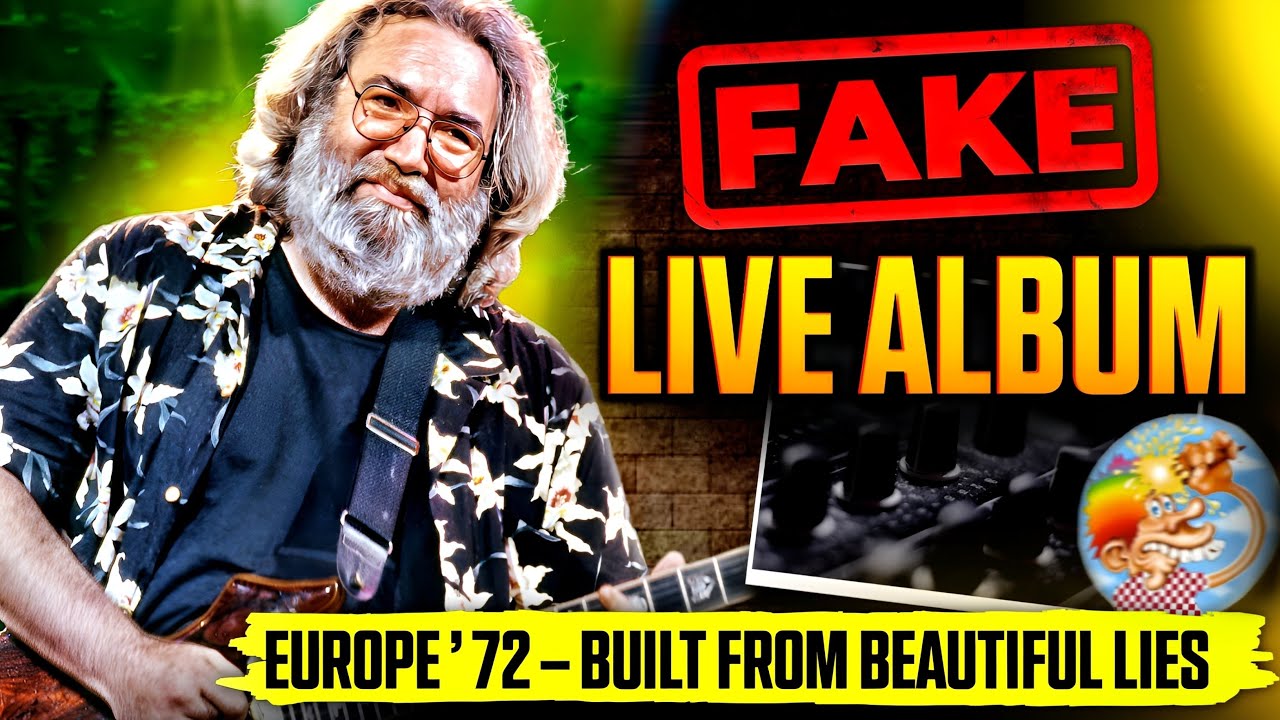
What most people don’t know about Europe ’72 is how much of the album is overdubbed. The “live” recordings were taken back to the studio, where Garcia, Weir, and the others added vocal harmonies, re-recorded guitar parts, and polished performances that were already excellent. The overdubs weren’t corrective — the live performances were genuinely great — but they were extensive enough that calling Europe ’72 a “live album” requires an asterisk. The vocal harmonies on tracks like “China Cat Sunflower” and “I Know You Rider” are studio additions, layered over live instrumental tracks. Garcia re-tracked some guitar solos. The mix was shaped and refined in ways that no purely live recording would allow.
This has been a point of contention among Deadheads for decades. Purists argue that the overdubs undermine the album’s authenticity — that the whole point of the Dead’s music was its ephemerality, its imperfection, its you-had-to-be-there quality. Defenders counter that the overdubs made the album commercially viable, which was the entire purpose. The Dead needed a hit. A raw, unpolished live recording — however musically authentic — wouldn’t have sold enough copies to dig the band out of its financial hole. The overdubs were a pragmatic compromise that saved the organization.
They worked. Europe ’72 was a commercial success, eventually going double platinum. It introduced the Dead to an audience that had never seen them live, and it established the band’s reputation as the premier live act in rock music. The album’s success funded the Dead’s operations for years and gave them the financial stability to build the Wall of Sound, launch their own record label (Grateful Dead Records), and enter the most ambitious phase of their career.
The irony is that the real Europe ’72 performances — the complete, unedited recordings — are now available through the Dead’s archival release program and through tape trading networks. And they’re better than the album. The raw recordings have an energy, a spontaneity, and a willingness to risk failure that the polished album sanded away. The studio overdubs made Europe ’72 a great album. The unedited tapes reveal it as a great tour — one of the greatest in rock history.
The full story of how the tour came together, what was at stake, and what the overdubs changed is in the documentary above.
Subscribe to The Shakedown Archives on YouTube
youtube.com/@theshakedownarchives