Skull & Roses: How Losing the Name War Won the Dead Everything
▶ Watch the full documentary on YouTube
SUBSCRIBE TO THE SHAKEDOWN ARCHIVESApril 1971. Five nights at the Fillmore East. The Grateful Dead walk into the best-sounding room in rock and roll, plug into somebody else’s sound system — which they almost never do — and roll sixteen-track tape across all five nights. What comes out of those tapes is the album most casual fans know as Skull and Roses. The friendly one. The gateway drug. The record that finally went gold. The one with Bertha and Not Fade Away and a nice invitation on the inside cover asking fans to write in.
That invitation is the whole story. Not the music, not the Fillmore, not even the fight with Warner Brothers over whether to call the record “Skull*ck” — though we’ll get to that. The thing that actually mattered was six words on the inside gatefold: Dead Freaks Unite. Who are you?
The Fillmore East Was Not a Rock Club
That’s the first thing people get wrong. Bill Graham opened it in March 1968 inside a former Yiddish vaudeville theater. Twenty-six hundred seats, and he ran it like a Broadway production. The Hanley PA system — state-of-the-art — was one of the few setups Owsley Stanley and the Dead actually approved of. The Joshua Light Show ran behind the bands on a giant screen. Graham hired real theater crew: ushers, stagehands, lighting techs who came up through film school and stage work.
The Dead trusted that house PA. And if you know anything about the Grateful Dead’s relationship with sound equipment, you know what that means. This was a band that hauled their own everything everywhere obsessively. A band that would eventually build the Wall of Sound — 604 speakers, 26,000 watts — because they didn’t trust anyone else’s system. At the Fillmore East, they plugged in and let Graham’s crew handle it. That decision shaped every note on Skull and Roses.
Hell’s Angels, Nitrous Oxide, and Southern Comfort
The Dead’s relationship with the New York Hell’s Angels was already deep by April 1971. Five months earlier, in November 1970, the New York chapter needed a venue for a benefit show. Graham wouldn’t let them use the Fillmore East. So the Angels rented the old Anderson Theater a few blocks down Second Avenue. No power, pitch dark inside. They hauled in a massive generator and ran cables straight down the center aisle.
The Dead played the benefit. Garcia signed off first, and once Garcia said yes, everybody else fell in line. Sandy Alexander, head of the New York chapter, was a guy Steve Parish described as tough but charismatic. By the time the April 1971 Fillmore run came around, Alexander was reportedly leaving bottles of Southern Comfort on Pigpen’s organ like offerings at an altar.
Picture the scene: Graham’s theater, professional PA, trained crew, ushers in position — and backstage, Angels drifting in and out, nitrous oxide, cocaine, the whole downtown outlaw economy bumping up against this immaculately run venue. Graham’s machine kept the front of house pristine. The back of house was a different country.
Running Lean
The band at this point was a quintet. Mickey Hart had walked away two months earlier, still gutted by his father Lenny Hart’s embezzlement. No second drummer, virtually no keyboards. On three of the album tracks, Jerry brought in Merl Saunders after the fact to overdub organ parts. But on stage, this was a stripped-down Dead — five guys in a room with the best sound system they’d ever plugged into.
April 27th, 1971 — the third night of the run — is the one everybody talks about. The Beach Boys showed up. They’d just signed a new management deal with Graham’s Millard Agency, and pairing them with the Dead at the Fillmore was one of the first moves to make the Beach Boys’ image hipper. The night before, Duane Allman sat in for “It Hurts Me Too,” “Beat It On Down the Line,” and “Sugar Magnolia.” The cross-pollination between the Allman Brothers Band and the Dead went back to February 1970.
The Title War
The Dead came out of that run with the best live recordings they’d ever made. Warner Brothers knew it. And that’s when the title fight became a war.
Phil Lesh suggested the name. Rex Jackson and Sunny Heard, two of the Dead’s most vocal crew members, latched onto it and wouldn’t let go. Bob Weir remembered it simply: they were adamant, and to the extent that all decisions were made in general meetings, they were loud.
What followed was a meeting at the Continental Hyatt House in Los Angeles. The whole Dead family flew from San Francisco. So many people the Warner Brothers conference room couldn’t hold them. Spencer Dryden counted thirty-five to forty people on the Dead side alone — sitting around the table, on the floor, standing against the walls. Person after person made their case for the unprintable title, all sounding perfectly rational. Garcia told the Warner execs they were targeting “the crazy market.” Scully argued that Dead fans didn’t shop at Sears.
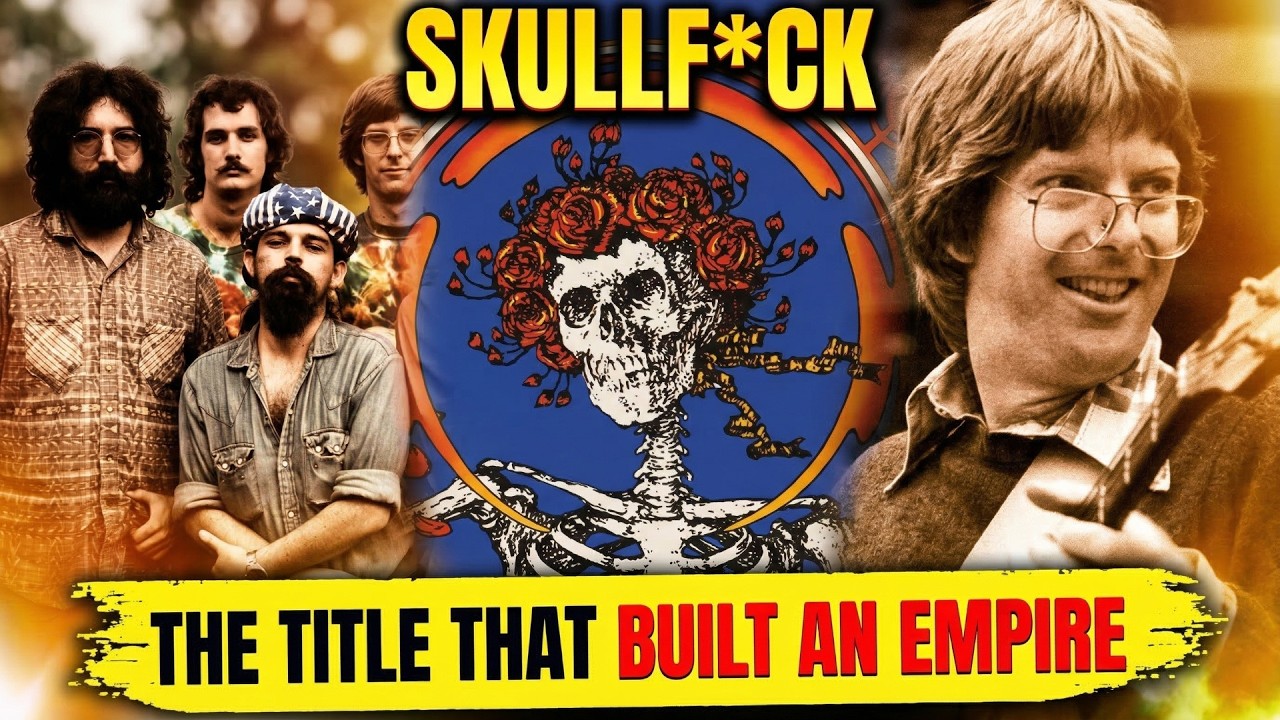
Warner won. The album came out in August 1971, simply titled Grateful Dead. Deadheads ignored the official title immediately. To them, it was Skull and Roses — or just Skull*ck.
What They Got Instead
The band didn’t walk away empty-handed. As part of the compromise, the inside gatefold carried a message in big bold letters: Dead Freaks Unite. Who are you? Where are you? How are you? Send us your name and address and we’ll keep you informed.
The initial response was modest — a few hundred people wrote in. Within two years, the mailing list had swelled past 25,000 names. That list became the backbone of the Dead’s direct-to-fan operation, the thing that would eventually let them bypass the entire music industry apparatus and sell out arenas without radio play or MTV. The business model that defined the Grateful Dead for the next twenty-four years started on the back cover of an album they weren’t allowed to name.
Think about that sequence. The Fillmore East gives them recordings good enough to sell. Warner Brothers finally has a product worth promoting. The Dead try to sabotage it with an unprintable title. Warner says no. The compromise produces a mailing list. The mailing list produces an audience the Dead own outright. No label, no radio station, no middleman required.
The Fillmore East closed two months later, June 27, 1971. Graham cited arena economics — the math didn’t work for a 2,600-seat theater anymore. The room that gave the Dead the best recordings of their career was gone. But by then, it didn’t matter. The Dead had a gold record, 25,000 names, and a direct line to every one of them. They didn’t need the Fillmore. They didn’t need Warner Brothers. They didn’t need anyone.
And it all started because somebody at a record label told them no.