Warren Haynes Had to be Jerry Garcia and Duane Allman — In the Same Year
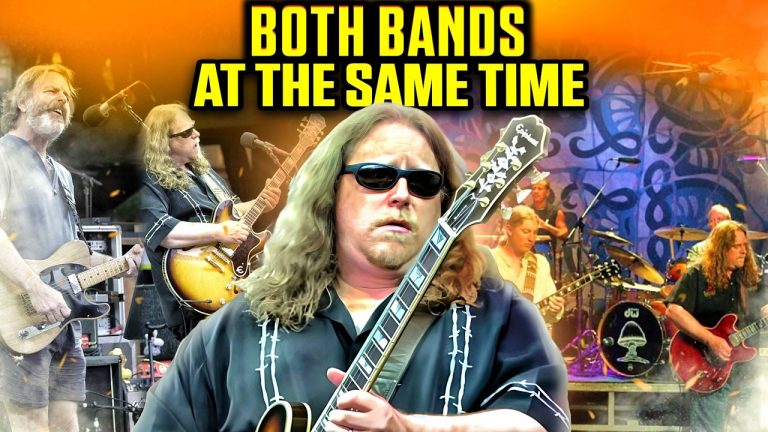
In 2004, Warren Haynes played 80+ shows across The Dead and the Allman Brothers — learning 150 songs while both bands told him: don’t imitate the legend before you.
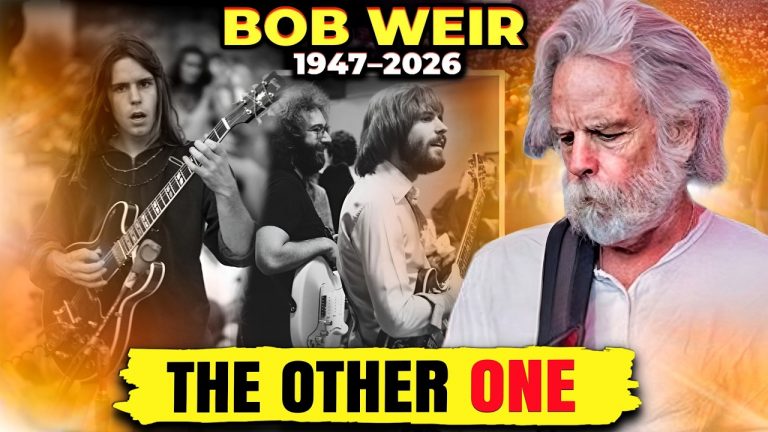
Bob Weir (born 1947) was the Grateful Dead’s rhythm guitarist, second vocalist, and the member most responsible for expanding what a rhythm guitar could do in an improvising band. His partnership with lyricist John Perry Barlow produced Estimated Prophet, Cassidy, Sugar Magnolia, Looks Like Rain, and many of the Dead’s most enduring songs. Post-Dead, he has led Ratdog, Furthur, Dead & Company, and his solo trio. Articles cover his songwriting, his relationship with Frankie Azzara, his role in holding the band together, and his late-career standing as the Dead’s surviving frontman.
In 2004, Warren Haynes played 80+ shows across The Dead and the Allman Brothers — learning 150 songs while both bands told him: don’t imitate the legend before you.
The news arrived like a shock despite the inevitability of mortality. Bob Weir, eighty years old and still performing with Dead & Co, had died. Within fifteen months, two of the original five members of the Grateful Dead—Phil Lesh in October 2024 and now Bob Weir—had passed away. For the first time in the band’s…
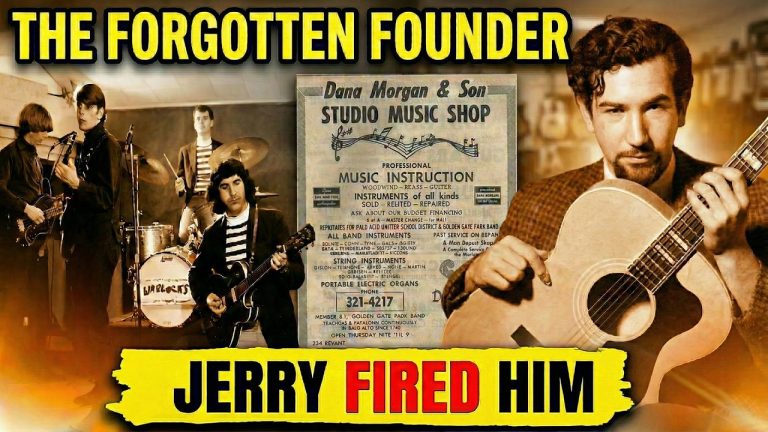
When Bob Weir joined the Grateful Dead on New Year’s Eve 1963 at Dana Morgan Music in Palo Alto, he was sixteen years old, relatively inexperienced, and stepping into a band that already had a distinctive direction. He was the youngest original member joining a group led by Jerry Garcia, and the conventional expectation might…
John Perry Barlow was a paradox wrapped in contradictions, and that’s exactly what made him essential to understanding the Grateful Dead‘s evolution. While Robert Hunter provided the mythological and literary foundation for Jerry Garcia‘s musical vision, it was Barlow who served as Bob Weir’s primary lyricist—a partnership that gave the Dead’s rhythm guitarist the poetic…
In the summer of 1987, two towering figures of American rock and roll converged on stadium stages across North America. Bob Dylan, the Nobel laureate of songwriting whose revolutionary albums had fundamentally altered the trajectory of popular music, agreed to share the stage with the Grateful Dead—a band that had built its entire existence on…
On its surface, the pairing seems inconceivable. Warren Zevon’s “Werewolves of London,” with its novelty-rock sensibilities, driving synth hook, and urban cynicism, belongs to a fundamentally different musical universe than the Grateful Dead’s spacious, blues-rooted improvisational cosmos. Zevon was a Los Angeles-based satirist operating in the world of radio-friendly rock hits; the Dead were San…
In the annals of rock and roll history, few musical decisions have proven as transformative and structurally crucial as the Grateful Dead‘s adoption of a two-drummer system. While most rock bands settled comfortably into the standard four-piece rhythm section—bass, drums, guitar, and keys—the Dead looked at this conventional wisdom and asked: what if we doubled…
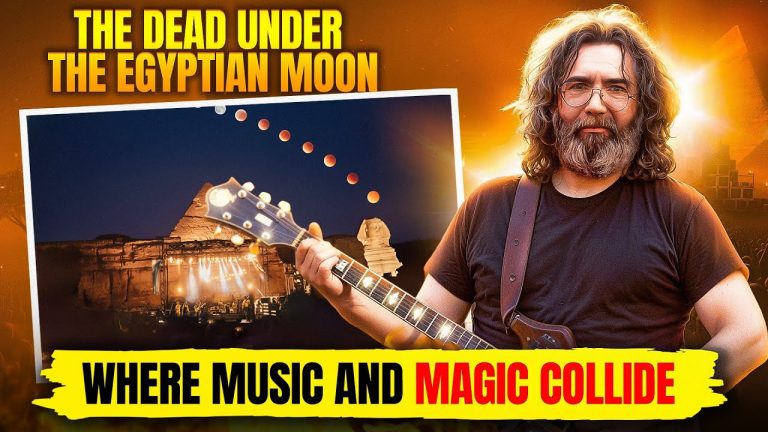
In September 1978, the Grateful Dead accomplished what few bands in history have even dared to imagine: they mounted a major concert production at the Great Pyramid of Giza in Egypt, complete with a total lunar eclipse coinciding with one of the performances. What unfolded across three shows—September 15, 16, and 19—was part musical event,…
When you think about the architects of the modern internet, you probably don’t imagine a bunch of people following a tie-dye band across America with tape recorders. But the Grateful Dead‘s influence on Silicon Valley and the digital revolution is profound, direct, and largely untold. The Dead didn’t just influence technology culture—they *created* its foundational…
On December 6, 1969, the Altamont Speedway in California became the stage for what would later be remembered as the death knell of the 1960s. The Grateful Dead didn’t perform that day—they withdrew after witnessing the violence, the Hell’s Angels security detail spinning out of control, and the four deaths that would stain the event’s…