The Truth Behind the Grateful Dead’s Dancing Bears
The Dancing Bears are the most recognizable image in Grateful Dead iconography — five cartoon bears in a marching line, each a different color, each with one foot up in what looks like a joyful dance. They’ve appeared on T-shirts, bumper stickers, tattoos, and bootleg merchandise for half a century. But most people who wear them don’t know two things: the bears aren’t dancing, and the story behind their creation involves Owsley “Bear” Stanley, a former LSD manufacturer who wanted to brand the Grateful Dead like a corporation.
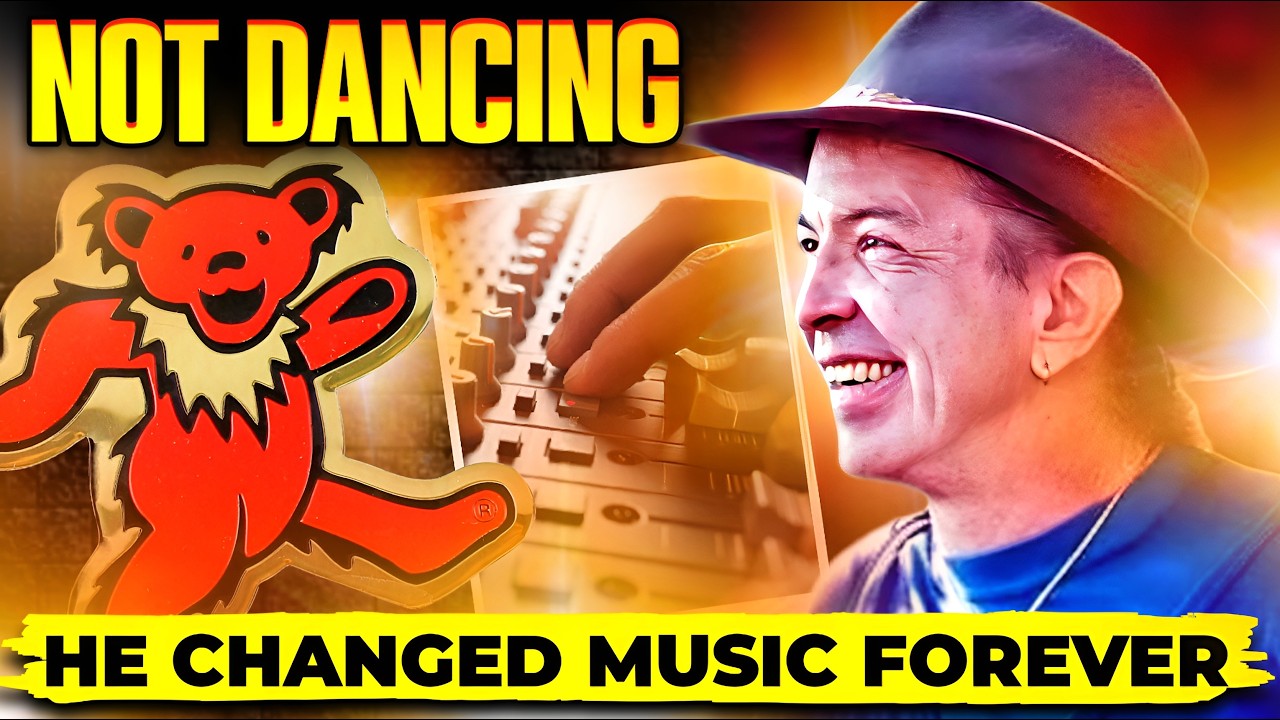
The bears were drawn by Bob Thomas, a graphic designer and friend of Owsley’s, for the back cover of the 1973 album History of the Grateful Dead, Volume One (Bear’s Choice). The album itself was Owsley’s project — a curated collection of live recordings from the Fillmore East in February 1970, selected and mixed under Owsley’s exacting supervision. The bears on the back cover were Thomas’s original artwork, and they weren’t meant to be dancing at all. They were marching. Thomas later clarified that the raised-foot posture came from a reference illustration of bears in motion — a walking stride, not a dance step. The association with dancing came from the Deadhead community, which saw the cheerful posture and the multicolored palette and projected their own interpretation.
Owsley’s involvement in the artwork was deliberate
Owsley’s involvement in the artwork was deliberate. By 1973, Owsley had been released from federal prison after serving two years for LSD manufacturing. His relationship with the Dead had evolved from live-in patron to something more like a brand consultant with an engineer’s obsession. Owsley understood, earlier than most people in the counterculture, that visual identity mattered. He’d already designed the Dead’s Steal Your Face lightning bolt skull — the other iconic Dead image — as a logo for the band’s equipment cases, so roadies could identify Dead gear at multi-band festivals. The bolt skull was functional before it was cultural. Owsley approached imagery the way he approached everything: solve a problem first, then let it become art.
The bears served a similar purpose. They gave Bear’s Choice a visual identity that was playful, distinctive, and immediately legible even at thumbnail size. In 1973, that meant record store browsers could spot the album from across the room. Fifty years later, it means the image works as a profile picture, a sticker, a patch. Owsley‘s instinct for visual branding was decades ahead of the music industry.
Bob Thomas’s original design featured bears in specific colors — red, orange, yellow, green, and blue — arranged in a descending line that suggested both movement and community. The bears are identical in shape but individuated by color, which mirrors something fundamental about the Grateful Dead’s musical philosophy: same structure, different expression. Each night’s setlist followed recognizable patterns, but no two performances were the same. The bears captured that tension between unity and variation without trying to.
The image took on a life that nobody
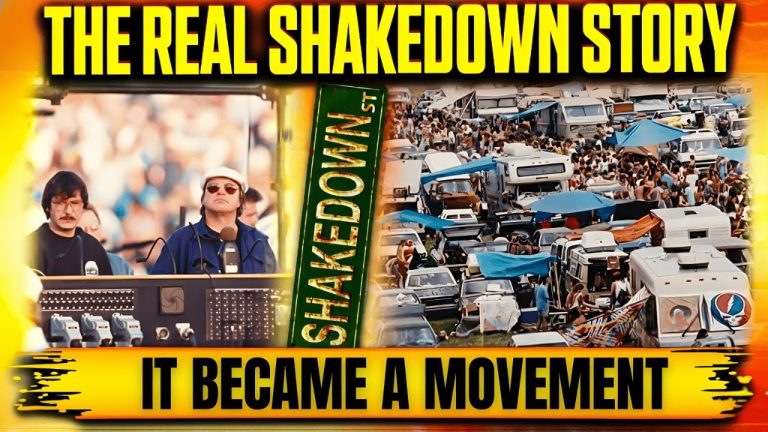
The image took on a life that nobody planned. By the late seventies, the Dancing Bears had migrated off album covers and onto the unofficial economy of the Shakedown Street parking lot — the pre-show marketplace where vendors sold handmade Dead merchandise. The bears appeared on tie-dyes, patches, pins, rolling papers, and every conceivable surface. Most of this merchandise was unauthorized. Bob Thomas didn’t see royalties from the parking lot economy. Neither did Owsley. The image had escaped its creators and become public property in everything but the legal sense.
That bootleg proliferation is part of what made the bears so powerful. Unlike the Steal Your Face skull, which the Dead’s organization actively policed and trademarked, the Dancing Bears spread through an informal network that functioned like open-source distribution. Every bootleg T-shirt was an advertisement. Every unlicensed sticker was a node in a cultural network. The bears became the Dead’s most effective marketing tool precisely because nobody controlled them.
The irony is that Owsley Stanley — the man who funded the Dead’s earliest equipment, built their PA systems, recorded their shows, and insisted on the kind of quality control that a Fortune 500 company would envy — created an image that thrived on the absence of control. The bears succeeded because they were given away, copied, remixed, and distributed by a community that didn’t respect intellectual property. Bear’s creation became bigger than Bear.
The full story of how the Dancing Bears
The full story of how the Dancing Bears went from album art to cultural icon — and what that reveals about the Dead’s accidental genius for branding — is.
Subscribe to The Shakedown Archives on YouTube
youtube.com/@theshakedownarchives
The Live Experience
The Grateful Dead’s live performances were fundamentally different from those of any other major rock band. While most acts rehearsed and repeated a fixed setlist, the Dead approached each show as a unique event. Setlists were chosen shortly before the performance, and the transitions between songs — the spaces where improvisation lived — were entirely spontaneous. A concert might last three hours or more, moving through structured songs, extended jams, and passages of pure collective improvisation that could be transcendent or chaotic, sometimes both simultaneously.
This approach demanded extraordinary musical communication. Each member of the band had to listen constantly to every other member, responding in real time to melodic suggestions, rhythmic shifts, and dynamic changes. Garcia often described it as a conversation — not a performance, but a dialogue between musicians who had developed, over years of playing together, an almost telepathic understanding of each other’s musical instincts. When it worked, the result was music that felt inevitable and surprising at the same time.
The Deadhead Phenomenon
The community that formed around the Grateful Dead was unprecedented in popular music. Deadheads didn’t just attend concerts — they built a culture. Tape trading networks distributed live recordings across the country before the internet existed, creating a shared archive of performances that fans studied with scholarly intensity. The parking lot scene at Dead shows became a self-sustaining economy of food vendors, craft sellers, and itinerant entrepreneurs who followed the band from city to city.
What distinguished Deadhead culture from ordinary fandom was its participatory nature. Deadheads didn’t consume the Grateful Dead’s music passively — they actively shaped the experience. Their energy in the audience influenced the band’s playing. Their tape trading preserved and disseminated the music. Their economic activity in the parking lots created the ecosystem that made extended touring financially viable. The relationship between the Dead and their audience was genuinely symbiotic, each sustaining and inspiring the other across three decades of continuous performance.
The Chemical Reality
Drugs were inseparable from the Grateful Dead’s story, but the relationship was more complex than the caricature suggests. LSD was foundational — the Acid Tests were the crucible in which the Dead’s improvisational approach was forged, and psychedelics informed the expansive, boundary-dissolving quality of their music throughout their career. But the drug culture that surrounded the Dead evolved over the decades, and not always in positive directions.
By the 1980s, harder drugs — particularly cocaine and heroin — had infiltrated both the band and their community. Garcia’s well-documented struggles with heroin addiction took a devastating toll on his health and his playing. The parking lot scene, once dominated by psychedelics, increasingly included dealers selling substances that were addictive and dangerous. The Dead’s open, tolerant culture — which had been a strength in the 1960s and 1970s — became a liability when that openness was exploited by people whose relationship with drugs was destructive rather than exploratory.
Related Articles
- Frankie Weir, Sugar Magnolia, and the Women Who Actually Ran the Grateful Dead
- How Owsley “Bear” Stanley’s LSD Built the Grateful Dead’s Sound
- Grateful Dead at MIT 1970: How the Band Became Silicon Valley’s Spiritual Architects
The Shakedown Archives publishes new research on Grateful Dead history each week. If you enjoyed this essay, you can subscribe to the companion YouTube channel below.
Subscribe on YouTube